Undergrad Scholarships
A Catalyst for Critical Thinking
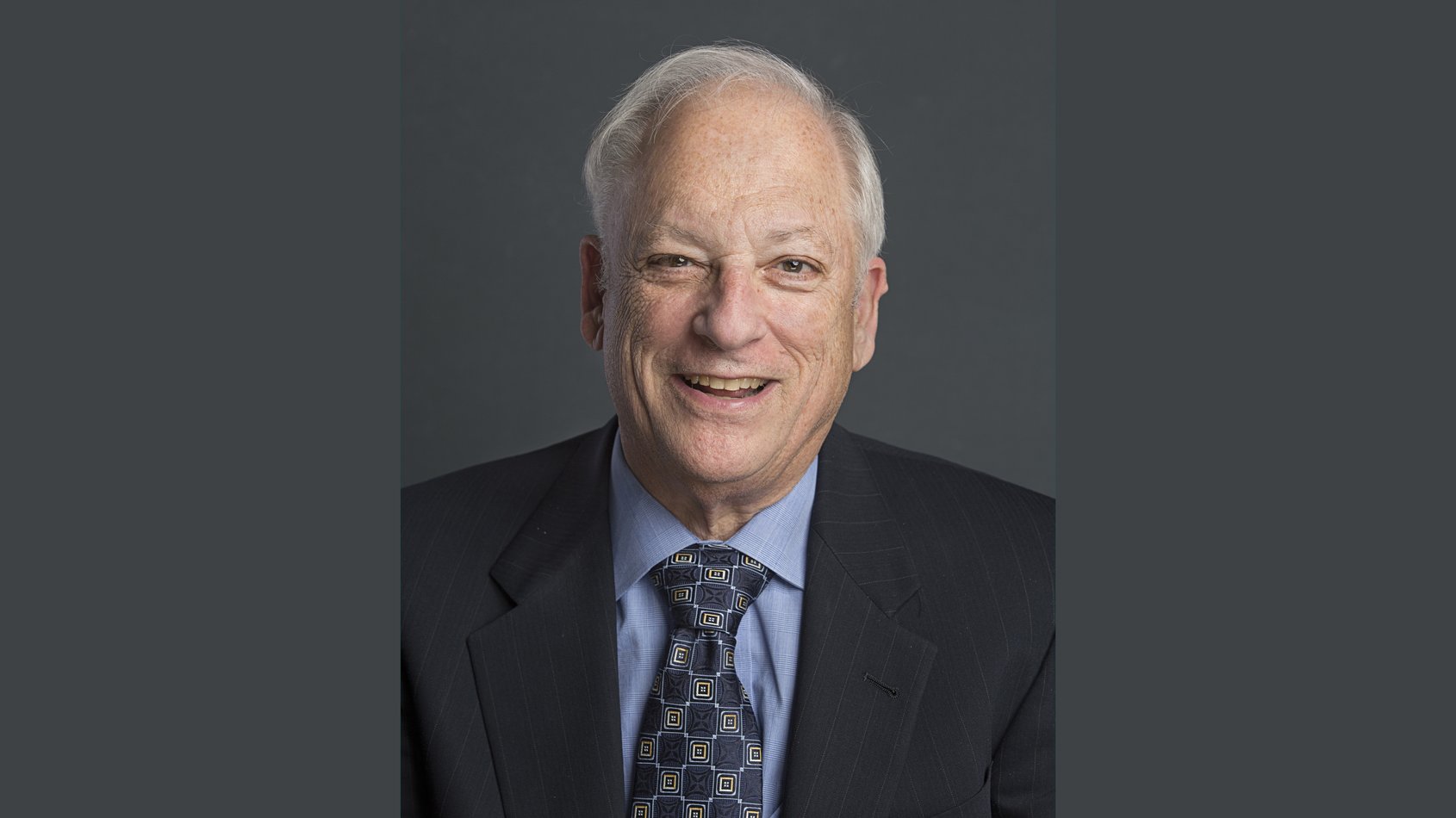
Ronald Koretz learned to think critically as an undergraduate, inspiring his career in evidence-based medicine and his support of Caltech students through the Caltech Fund.
As valedictorian of his high school, Ronald Koretz (BS ’63) thought he'd be one of the top first-year students entering Caltech in the early 1960s. According to Koretz, that confidence was short lived. Within 20 minutes of a new student orientation, he'd met two other new students who'd already been published.
Despite that early reality check, Koretz would go on to major in biology and graduate Caltech with honors. He would continue his education at UCLA, at what is now the David Geffen School of Medicine. Today he's mostly retired, a former chief of gastroenterology at Olive View-UCLA Medical Center and professor of clinical medicine emeritus at UCLA. He credits the Institute in providing him with the foundation for critical thinking and now gives back as a longstanding supporter of Caltech's Undergraduate Scholarship Fund.
"Caltech is a special place," Koretz says. "I want to do anything I can to help a student there who might otherwise not be able to stay."
Lessons in Resilience
Koretz's earliest days at the Institute took a number of unexpected turns, ultimately building his resilience. Prior to finding his affinity for biology, he was a math major struggling with Math 5, which serves as an introduction to group and set theory. "I went to the professor to drop the class," recalls Koretz. "The professor asked me why I did not ask questions and I told him I didn't understand enough to even frame a question." Ultimately, he persevered and earned a B+ in the class.
Next, he tried his luck at football. With just 22 students on the team, he was still a benchwarmer.
"I had never played tackle football in my life," says Koretz. "It turned out that I was arguably the worst football player on what might have been considered one of the worst football teams in the country."
Footballer and Fighter Pilot
Asked what makes Caltech special, Koretz is quick and to the point: "They make you think."
He contrasts this with the memorization required to be successful in medical school. "At Caltech, I had been forced to forgo memorization and think things out instead," he says. "In my first semester at UCLA, I found myself with a cadaver in Gross Anatomy memorizing every nerve and muscle."
Critical thinking skills Koretz honed at Caltech led him to be an early adopter of what would become evidence-based medicine. He puts his trust in research and data, not just how it's been done before or the credentials of his colleagues.
His lectures help to illustrate this point. The first slide in one of his standard presentations is a photo of Koretz in his Caltech football uniform and another of an F-105 fighter bomber. He tells attendees that he played college football in the Rose Bowl and flew a Vietnam War-era fighter jet.
Both are technically true.
Caltech played one home game a season at the historic Rose Bowl stadium, but it wasn't "The Granddaddy of Them All" post-season game most people associate with Pasadena.
As a flight surgeon stationed at McConnell Air Force Base in Kansas, his duties included flying in the back seat of an F-105 on training missions. Pilots sometimes asked him to take the stick and keep the plane straight and level. "I did try to turn it a couple of times," he admits. "Once, not having any idea about how to fly an airplane, I came close to stalling it when we were at tree-top altitude."
After revealing the stories behind the photos, he tells audiences to disregard his alleged authority and pay attention only to the data.
Contributions to Evidence-Based Medicine
In 1972, while a gastroenterology fellow at UCLA, Koretz had a patient with Crohn's disease so severe that most of his intestine had been removed and he was receiving intravenous nutrition to provide him with the nutrients he could not otherwise absorb. That patient was the first to be discharged on home parenteral nutrition, infusing himself every night.
While developing a lecture about this success story, Koretz dove deep into the literature, leaning on the critical reading skills he'd learned at Caltech. After reading hundreds of journal articles and looking at data from dozens of randomized trials, he started to question how hospitals used the approach.
Parenteral nutrition was being used for in-patients with trauma, surgeries, cancer, and a variety of illnesses to help them gain weight. However, the data showed it wasn't producing better outcomes, and it was costly.
"I spent the next three decades of my career battling the use of hospital parenteral nutrition and developing a national reputation for my views," he says. "My thought was, why are hospitals reducing costs across the board when they could be cutting the things for which they have no evidence of efficacy?
"Evidence-based medicine became my real love," he adds. "All of that was because Caltech had forced me to learn how to read and think critically."
Koretz continues to critically analyze the literature in a column for the Journal of Parenteral and Enteral Nutrition Journal Club. He recently put the finishing touches on his 100th article.
A Tradition of Giving
As a Caltech Fund Catalyst, Koretz is among the Caltech Fund's leading donors who contribute to areas of greatest need including undergraduate scholarships, graduate fellowships, and extra-curricular programs and student clubs. Through unrestricted giving, the Caltech Fund also helps support wellness offerings, research and internship opportunities, and seed funding to innovators.
Koretz credits his parents for his philanthropic mindset. "Ever since I was a child, I learned from my parents that it is important to help others. My parents were honest and empathic to an extreme and these behaviors became ingrained in me." In addition to his contributions to his alma mater, Koretz served on the board of directors for the Midnight Mission in downtown Los Angeles for 20 years.
Looking back at the foundation his Caltech education provided him, Koretz is committed to supporting evidence-based thinking for the next generation of undergraduates. "Society as a whole is too quick to believe what they see or hear from others and do not use their own thinking capacity to come to conclusions," he says. "I believe that Caltech wants to assist young people in having the opportunity to learn how to be critical thinkers."