Graduate Fellowships
From Flashlight to Fellowship: A Journey Toward Climate Solutions
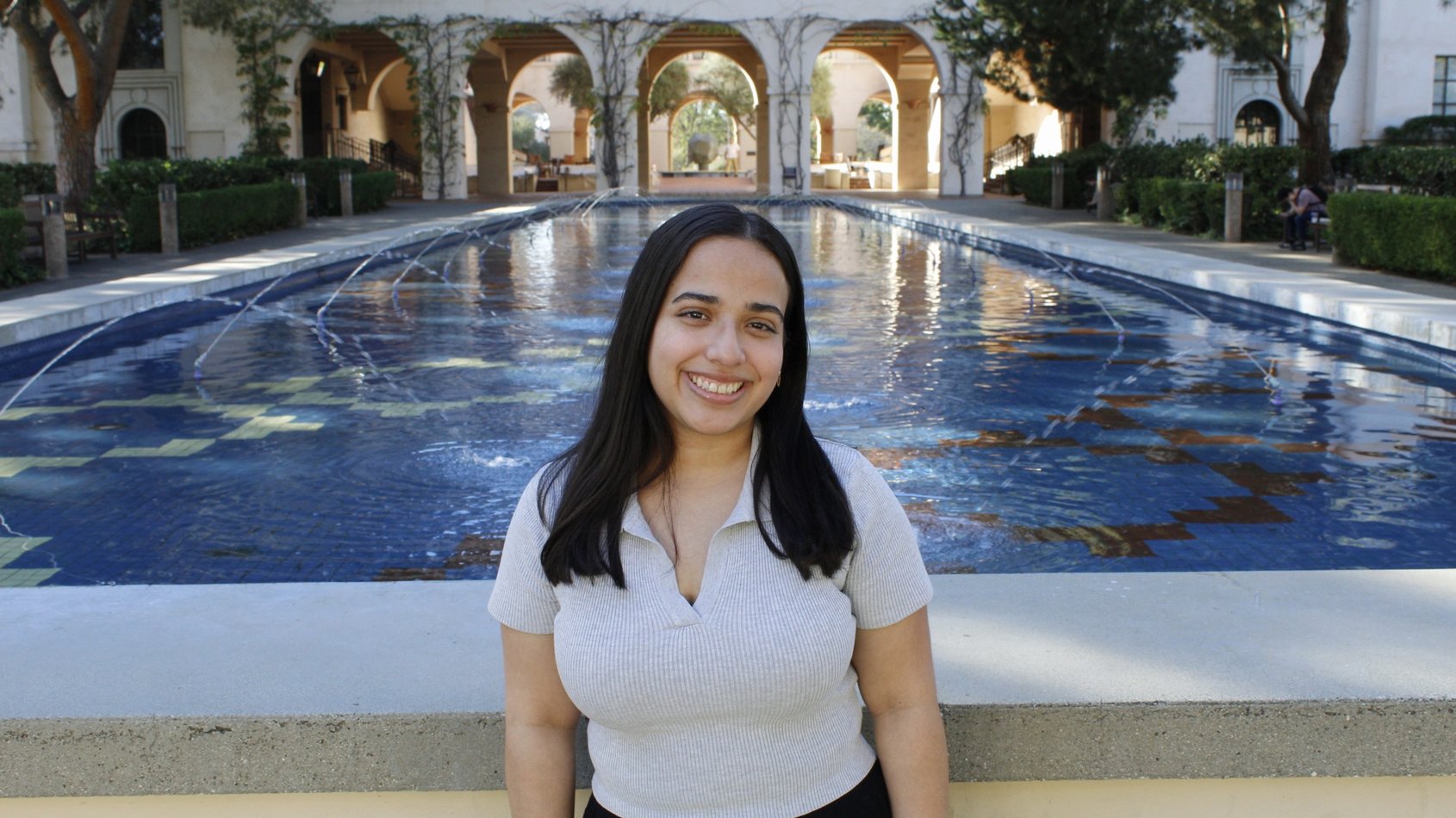
Inspired by her firsthand experience of climate change and supported by the Peter and Melanie Cross Endowed Graduate Fellowship, Melanie Rodríguez Pabón is using electrochemistry to drive a more sustainable future—and helping others follow her path.
When Hurricane Maria struck Puerto Rico in 2017, it became the deadliest and costliest storm ever to hit the island. Melanie Rodríguez Pabón’s house in the rural hills was battered by wind and rain.
"After the hurricane, my family spent about six months without any source of electricity. We didn’t have a power generator either. I remember studying at night with a flashlight, trying to read. With no generators to pump water up the mountains, we had to go down to refill stations to fill our gallon water bottles," says Rodríguez Pabón.
Experiencing Maria's impact made her realize that climate change wasn’t a distant threat. Seeing the hurricane’s impact on her community, Rodríguez Pabón wanted to use her growing interest in engineering to help, but she wasn’t yet sure how.
Carbon Capture and Conversion at Caltech
In a summer program before attending college, Rodríguez Pabón became fascinated by chemical engineering. She saw the possibilities of electrochemistry and realized the potential impact this research could have in mitigating climate change. Her undergraduate work on the electrochemical CO₂ reduction reaction won the Firestone Medal and Kennedy Thesis Prize for the best undergraduate honors thesis in Engineering and Applied Sciences at Stanford University.
Both the promise and challenge of this approach to climate change mitigation is scalability. Rodríguez Pabón describes how, on the one hand, creating financial incentives encourages commercial demand. “CO₂ is a major greenhouse gas contributing to climate change," she says. "While storing CO₂ underground is economically viable, it misses the opportunity to transform CO₂ into valuable products like ethylene using renewable electricity—potentially creating a sustainable circular economy."
On the other hand, scaling the reaction itself is challenging.
“The CO₂ electrochemical reduction reaction faces scalability issues and requires ultra-pure water, making it expensive. For example, impurities like calcium and magnesium can degrade the reaction, leading to costly hydrogen production," she adds.
Inspired to find solutions to these challenges, Rodríguez Pabón was drawn to Caltech by the research opportunities in sustainability and the institutional commitment to this area exemplified by the Resnick Sustainability Institute. The offer of fellowship funding solidified her decision to attend by demonstrating Caltech’s interest in attracting the best and brightest students.
Through seminars at the Resnick Institute and research rotations in labs in the Divisions of Chemistry and Chemical Engineering and Engineering and Applied Science, Rodríguez Pabón has experienced the intensely collaborative and multidisciplinary approach that defines Caltech.
“The seminars bridge the gap between research in, say, electrochemistry for ammonia production and discussion of the sociological aspects of climate change," says Rodríguez Pabón. "We need all these technologies and pathways to achieve the actual goal of reducing emissions and preventing further impacts of climate change."
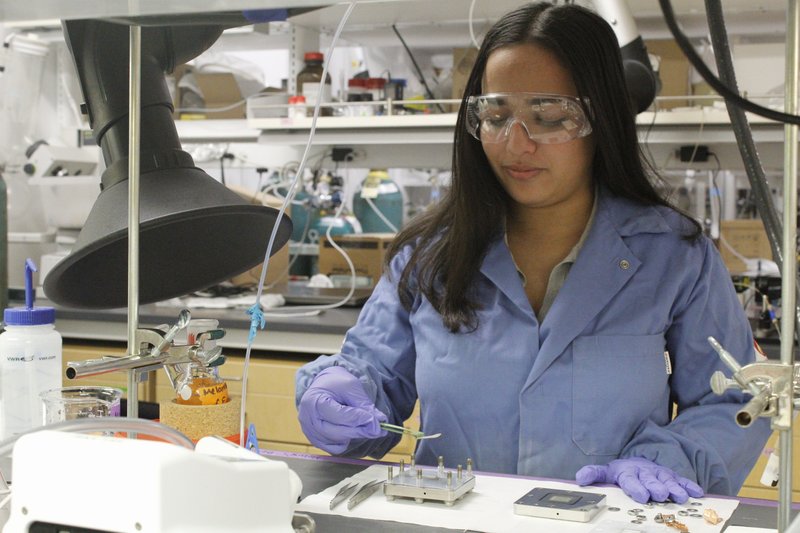
Having joined the research group of Harry A. Atwater, the Otis Booth Leadership Chair of the Division of Engineering and Applied Science and Howard Hughes Professor of Applied Physics and Materials Science, she is developing research in reactive capture, combining the CO₂ reduction reaction with CO₂ capture from the ocean in the same reactor, aiming to improve overall energy efficiency.
“One thing I love about Professor Atwater's group is that they think big picture. It’s important to look at the fundamental science to develop these technologies that are very innovative, but also to keep in mind how we can design these systems so that in the future they would be scalable," says Rodríguez Pabón.
Many Paths Support Success
Rodríguez Pabón recognizes the importance that support has had in her success. When she learned about a STEM-focused secondary school that would give her a great education and introduce her to research, her family made sacrifices to pay for one year of fees. Through her hard work, Rodríguez Pabón earned a scholarship to cover the remaining years’ fees. She has continued to earn generous donor support through her achievements, including as a Cross-Resnick first-year fellow at Caltech in 2024–25.
From an early age, she has worked to inspire others like her to pursue science and engineering and remove obstacles for those who show interest. In high school, she co-founded Latinas in STEAM and visited elementary schools to encourage young girls' curiosity. As an undergraduate, she supported a student from Puerto Rico whose school had been badly damaged in an earthquake in their successful application to Stanford. Inspired by that outcome, she started a free online summer program through Latinas in STEAM to coach other promising Puerto Rican students from different socioeconomic backgrounds in college applications to US institutions. The program has guided almost 300 students, including a current undergraduate at Caltech.
Fellowship funding at Caltech helps bring talented students like Rodríguez Pabón to the Institute—students who, through their science and outreach, continue to build a community of problem-solvers ready to tackle the biggest challenges.